Showing posts with label 3D models. Show all posts

Sunday, August 10, 2025

A SUMMARY OF MY BOOK: Media Arts Education


A SUMMARY OF MY BOOK:

Media Arts Education: Transforming Education Through Multimodal Cognition, Holistic Learning, and Techno-Embodiment, by Dain Olsen, 2025, Routledge

This book explains the emerging field of K-12 media arts education (MAE), including its multimodal understanding of cognition and learning, its interconnective nature and societally formative role, and its potentials for educational transformation. MAE can be understood simply as a “Digital Creativity Studio,” encompassing all digital media arts forms (e.g., photo, graphics, animation, sound, interactive, XR), which is ideally positioned at the center of the educational system. Its diverse forms and processes support students to produce and design any product, message, or simulated experience imaginable. Given this limitless creative and interdisciplinary capacity and its robust implementation, MAE is capable of advancing our current content- and system-centered 'factory model' into a student- and learning-centered, adaptive, and distributed model, which is more effective, engaging, and equitable for all students. 

The book’s first section examines “media arts” as it exists in the world, providing a visceral sense of its dynamic and diverse experiences as a unified field of electrified creativity, which form our society’s “nervous system” across its communications, design, and interactivity. It highlights media arts’ aesthetically synthesizing, cognitive, and socially interconnective properties and their implications for pedagogy. It also introduces the history of media arts in education, including its institutional formalization through national and state standards and initiatives, and its ongoing challenges towards full establishment. 

In the proceeding chapters, relevant neuroscientific, cognitive and educational research fundamentally restructures the orthodox understanding of learning. From MAE's aesthetic and embodied perspective, learning is reconceptualized as a biological process of adaptation, sense-making, and multimodal cognitive development. Higher-order, abstracted cognition is rooted in our sensorimotor neurology as a form of aesthetic synthesis, empathy, and metaphoric conceptualization, which mirror MAE's multimodal production processes. This leads to supporting research on multimodality in learning, education, and AI development. In essence, MAE is understood as the technological externalization of embodied cognition and learning.

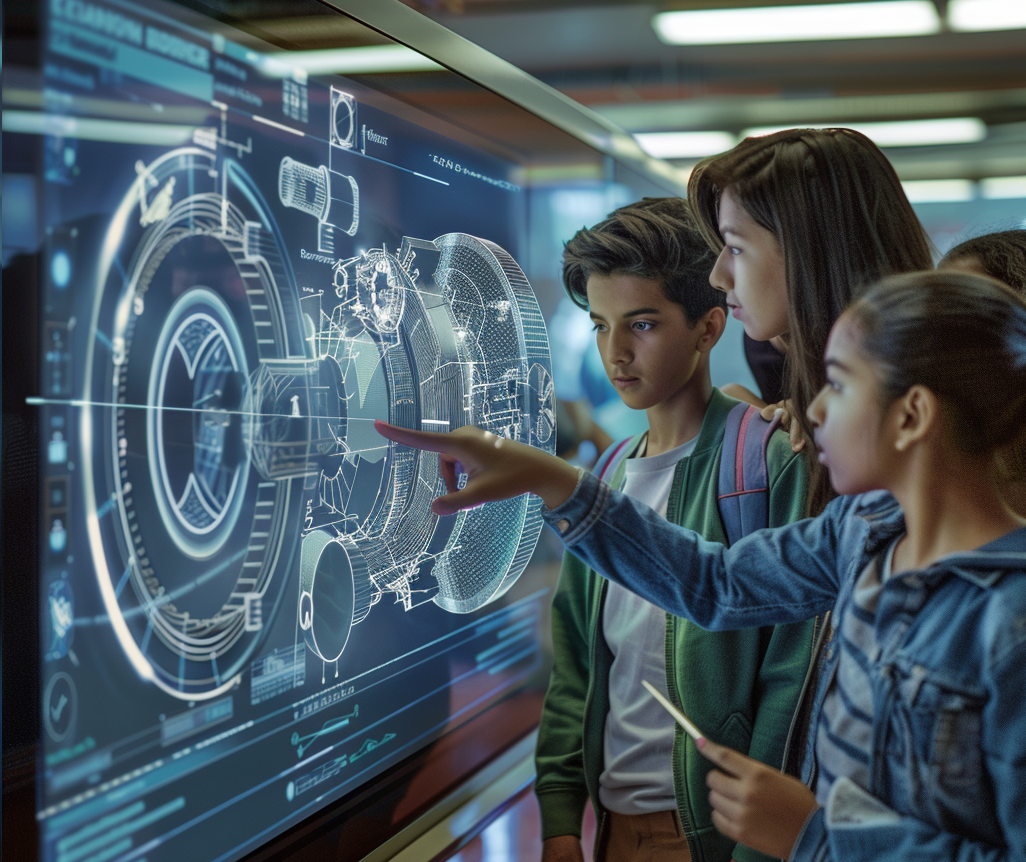
On this research-based foundation, the book articulates a comprehensive MAE meta-framework, structuring its theoretical and pedagogical architecture. It examines the major flaws of traditional education and demonstrates how MAE's practices serve as potent antidotes, proposing MAE as an intermediating, holistic solution to systemic challenges. Media arts' versatile, multimodal tools support students to represent, translate and interact creatively with the academic curriculum in real world applications . For example, they can create interactive, 3D animated models that demonstrate science concepts, such as cell division or weather systems. Students are then able to manipulate and play with these models until they tangibly understand those concepts, and then transfer them to varied situations. Media arts’ diverse tools provide flexible means to bring abstract curricula to life for all students.

In conclusion, MAE functions as a multimodal, interdimensional, interactive textbook and makerspace that facilitates deeper and more resilient, adaptable learning for all students. Its "low threshold-limitless potential” design promotes universal student success through intrinsic motivation, self-direction, and metalearning. MAE ultimately advances the conventional educational model into an adaptive and self-improving system that prepares all students with the relevant competencies and multi-literacies necessary to design and manage a complex, sustainable, and vibrant digital society.

Saturday, December 21, 2024

Reimagining Education: Embracing the Power of Media Arts


As explained in my book and podcasts on Media Arts Education, the
current educational paradigm, what I would call traditional education (TE), is based on the flawed assumption that learning is primarily about content retention, as measured through tests. This antiquated, pseudo-factory approach prioritizes passive presentation and consumption, which results in shallow understanding, and is intrinsically biased against students with socioeconomic disadvantages.

Media Arts Education (MAE) reorganizes education as an experiential, student-centered process that mirrors the natural ways our minds learn, with the school system flexibly supporting and accommodating their personal capacities and preferences.


Engagement Through Creation:

  • MAE is embodied cognition in action, utilizing multimodal synthesis and aesthetic empathy to engage students in deep, meaningful learning.

  • Imagine a media arts laboratory buzzing with creativity. Students are not passively absorbing information but actively constructing knowledge through hands-on projects.

  • Exemplary MAE projects highlight this dynamic learning approach:

    • Students design their ideal future city using 3D modeling and printing, applying math, engineering, and sustainability principles.

    • An augmented reality project brings history to life, with students creating interactive exhibits exploring ancient civilizations.

    • A video game based on a sci-fi novel integrates physics simulations, storytelling, and advanced mathematics.

    • A transmedia mental health campaign empowers students to address real-world issues through creative media production.

  • These projects are not mere add-ons to the curriculum. They are the curriculum, seamlessly weaving together various disciplines and igniting students' intrinsic motivation.

Contrasting Traditional and Media Arts Education:

Feature

Traditional Education (TE)

Media Arts Education (MAE)

Learning Model

Content-centered, passive retention

Experiential, student-driven construction

Instructional Approach

Teacher-directed, textbook-based

Collaborative, project-based

Cognitive Focus

Narrow, linear, abstract

Holistic, multimodal, embodied, environmentally interactive

Assessment

Declarative, competitive, standardized tests

Holistic, informative, process-oriented

Student Engagement

Often low, driven by external rewards

High, fueled by intrinsic motivation

Societal Relevance

Struggles to keep pace with the digital world

Directly reflects and engages with our digital society

MAE combines but flips the balance of MAE 60% & TE 40%, with core content interwoven into experiential, projects. 

Less content, with deeper and adaptive understanding, which catalyzes more learning, by motivating the student’s intrinsic drives for personal, culturally contextual success. The student is engaged directly with the world and accruing relevant skills, knowledge and achievements, rather than focused on performing for an artificial, tangential educational curricula, teacher, and system. TE is peculiar to itself, and does not mirror any other real world system or situation. Students master the TE system, not the content or the learning process itself in their actual, real world application.

Benefits and Potentials of MAE:

  • Fosters deeper understanding: MAE supports students in translating abstract concepts into tangible, multimodal forms: videos, podcasts, websites, 3D models

  • Enhances critical thinking and problem-solving: MAE projects demand creative solutions, adaptability, and collaboration.

  • Cultivates digital and media literacy: Students learn to analyze, evaluate, and responsibly produce media in our digitally saturated world.

  • Promotes equity and inclusion: MAE's flexible tools and diverse approaches support learners of all abilities and backgrounds.

  • Prepares students for the future workforce: MAE equips students with essential skills for success in the 21st-century economy.

Integrating and Expanding MAE:

  • Interdisciplinary projects are the ideal starting point, showcasing the power of MAE to enhance learning across various subjects.

  • Success with these projects can pave the way for the development of a dedicated MAE subject area with its own studio/laboratory.

  • This dedicated space becomes a hub for multimodal learning and creation, equipped with cutting-edge technology, fostering a vibrant culture of learning.

The Future of Learning:

MAE is not merely an educational reform; it is a profound shift in our understanding of learning and intelligence, recognizing the power of embodied, multimodal cognition.

In a world increasingly shaped by technology, including the rise of AI, MAE offers a vital, embodied counterbalance, ensuring that human creativity, empathy, and ethical judgment remain at the forefront of education and society.

By embracing MAE, we empower students to become active, engaged learners, capable of navigating the complexities of the digital age and shaping a future that reflects our highest aspirations.


Saturday, September 28, 2024

AI and Media Arts Education: Holistic Educational Transformation

By Dain Olsen


Media arts is defined as the "creative, machine-based manipulation of aesthetic phenomena for meaning; an aesthetic synthesizer for forming, capturing, processing, simulating, and distributing products and experiences" (Olsen, 2024)
. AI falls within this category, making it a major, emergent media arts form. AI's exponential development will have manifold impacts on our society, arts, and education, both positive and negative. Efforts are underway to manage and regulate the negative outcomes, but success is not guaranteed. We should aim to be proactive, holistic, and wise in our responses to AI. I will present media arts education’s (MAE) critical role, in conjunction with AI, in forming an educational system that can address these problems.

Understanding AI's Impact

AI's ‘explosive’ development is a radial, 360-degree expansion across all domains and dimensions of society. It's not just a tool we can choose to use or put away, but a systemic, technological force with unpredictable organic characteristics. Like social media, and any other technological leap, AI will likely have both positive and negative effects on society, as well as unintended consequences. Nevertheless, AI is here to stay, so we will need to learn to work with and manage it as it progresses and proliferates.

AI has shown impressive and breakthrough results in various applications across societal sectors, such as accelerating scientific discoveries, advancing industrial efficiencies, and supporting greatly increased individual productivity and capabilities. Yet, it will also eliminate major sectors of employment, can exacerbate criminal activity, and is demonstrated to be unreliable and prone to errors. Artistically, AI can support more students to produce more sophisticated products, for example in verbal prompts to create entire video games. It also can enhance creativity and invention by generating compelling variations that humans might not have considered. On the other hand, its autonomous creative expression tends to be conventional, slick and fairly ‘soulless’. 

Theoretical improvements to AI in Generalized Intelligence and Superintelligence are arguably far off or even infeasible. There is also the possibility that AI will fail to fulfill the hype that usually accompanies new technological breakthroughs.

AI in Education

In education, AI could provide personalized tutoring along with illustrative multimedia graphics, support teachers in lesson preparation and assessment, and help manage bureaucratic processes. However, the overuse of AI might also lead to decreased student motivation and a tendency to skip difficult cognitive processes and critical thinking. In fact, some edtech companies are suggesting that it replace arts and media arts instruction. Furthermore, it raises the question of whether we will use it in innovative new ways to truly advance education, and limit it to improving traditional methods.

Major Concerns

Despite its profound benefits, AI also raises these serious reservations:

  • It's an experimental technology with unpredictable consequences

  • There's a risk of becoming completely dependent on AI, and even an imperative in every aspect of society, 

  • AI may further amplify societal disparities and inequalities

  • AI is limited by our own mindsets and habits

  • It is an energy hog, which is already challenging our grids and our CO2 reduction goals

  • It is unclear whether governmental regulations and educational policies will be fully effective and ahead of the curve in monitoring, preventing and solving AI’s problems

A Media Arts Education (MAE) Perspective

MAE presents a primary means to improve and transform education, particularly in combination with AI, which can ultimately address these larger negatives. Essentially, MAE supports the core content and STEM concepts to become multimodally plastic, flexible, and versatile, so that they come alive with artistic and design capacities. Thus students, through engaging collaborative projects, can apply, represent and simulate the abstract content through combinations of image, sound, story, graphics, interactive and virtual forms (e.g. 3D animated, playful models of physics, mathematics, cell division, weather, etc.; science or history videos; video games, immersive XR environments, etc). Students would manipulate, adjust, and play with these multimedia models until they fully and tangibly understand those concepts, and then transfer them to varied applications and situations. This results in deeper, more resilient learning, aligned with current learning science and cognitive research.

Thus, students gain flexible, diverse inquiry pathways for actively applying, demonstrating, and sharing their academic proficiency, beyond standardized tests. Also, students are in the position of directing their own learning, based on their own interests and needs. No other subject area has the capacity to form such holistic, transdisciplinary, culturally meaningful and community connected forms of creative inquiry and productive interaction. This is the perfect embodied, social, holistic complement to AI’s relatively narrow, intellectual capacities for instructional support.

Consider one example of this MAE-based approach: Students produce a transmedia mental health campaign,  which supports all students to produce, share and interact in socially beneficial and empowering ways. Students produce diverse events, broadcasts, and interactions for varied outputs and audiences. They apply statistical analysis to measure algorithmic processes and their impacts on the school and community. All students gain critical media literacies for verifying, analyzing and evaluating multimedia information and processes, and collaboratively nurturing a civil digital society. 

Media Arts + AI = Holistic Educational Transformation

We need to prepare youth for a rapidly changing world, supporting them to ensure that AI is designed and utilized effectively and strategically to address a convergence of global challenges, including AI itself. AI’s support for individualized skills mastery and teacher efficiency means that schools can begin to shift to higher-orders of instructional implementation, such as MAE can offer, which foster student-centered initiative, ownership and motivation. It is important to appreciate that the human, embodied mind, and our collective minds, are tremendously more powerful and potentiated than AI is, and perhaps ever will be. An advanced educational system can begin to fulfill that potential, ultimately benefiting society in extraordinary ways.

Factory Model: regimented, assembly-line, one-size-fits-all, top-down, cognitively narrow, no-context

MAE Model: flexible, adaptive, inclusive, student-centered, cognitively expansive, enriched contexts 

In conclusion, this results in a flexible and interconnective educational system which actuates students’ personal inquiry process into boundless possibilities, and infuses the system as a whole with a collective drive towards continual adaptive improvement and learning about learning.  It allows students to actually practice management of their digital society, including AI and other literacies (e.g. media, digital) towards ethical, equitable and holistically grounded objectives. This transformed model provides the means by which our society learns to manage AI and address our converging global challenges. 


Olsen, D. (2024).
Media Arts Education: Transforming Education Through Multimodal Cognition, Holistic Learning, and Techno-Embodiment. Taylor & Francis.

Sunday, September 22, 2024

CONVERSATIONS WITH AI: Media Arts (Education) and Artificial Intelligence (AI): A Symbiotic Relationship (AI Generated Notes)

CONVERSATIONS WITH AI

Media Arts (Education) and Artificial Intelligence (AI):

A Symbiotic Relationship

Dain Olsen:

Media Arts is the machine-based, multimodal, aesthetic synthesis of meaning. Media Arts Education is the embodied enactment and understanding of media arts production and design processes.

AI:

Media arts and artificial intelligence are inextricably linked, sharing a common ground in their manipulation of aesthetic meaning and experience through machine-based processes.

Here's a breakdown of their relationship:

1. Tool for Creation:

  • Automation: AI can automate repetitive tasks, freeing artists to focus on creative concepts.

  • Generative Art: AI can generate new artistic content, expanding the possibilities of expression.

2. New Mediums:

  • Interactive Art: AI enables the creation of interactive experiences that respond to user input.

  • Virtual and Augmented Reality: AI plays a crucial role in creating immersive virtual and augmented reality environments.

3. Challenging Definitions of Art:

  • Computational Creativity: AI raises questions about what constitutes art and who can be considered an artist.

  • Human-Machine Collaboration: The collaboration between humans and AI blurs the lines between creator and tool.

4. Ethical Considerations:

  • Bias and Fairness: AI algorithms can perpetuate biases present in the data they are trained on.

  • Ownership and Authenticity: Questions arise about who owns AI-generated art and whether it can be considered authentic.

In essence, media arts and artificial intelligence are mutually beneficial. AI provides new tools and possibilities for artistic expression, while media arts pushes the boundaries of AI and challenges our understanding of creativity and technology. As these fields continue to evolve, we can expect even more innovative and thought-provoking works to emerge.


Saturday, September 17, 2016

Media Arts Education - Learning Amplified


MEDIA ARTS EDUCATION: K12 Arts Education for the 21st Century
We live in a “media arts” centered world. We know and learn about, and create our contemporary world through media arts tools, forms and processes. Our 21st C global culture has moved from text-based to multimedia-based modes of communication and interaction. Particularly in California, media arts has a long historic and cultural legacy, and accounts for a substantial and increasing portion of our  $375 billion “Creative Economy”.
It is essential that all students become versed in these new modes to become empowered citizens, effective communicators, and to develop innovative solutions to contemporary challenges.
"Media Arts Education" is a relatively new categorization of K12 arts education, alongside of the traditional disciplines of Dance, Music, Theatre, and Visual Arts. It encompasses the digital media arts of imaging, moving image, sound, interactive and virtual design.
Media Arts Students can:
These actual classroom projects demonstrate Media Arts Education’s capacity to:
  • Cultivate 21st Century Skills in Communication, Collaboration, Creativity and Critical Thinking
  • Promote student-centered, inquiry-driven learning that is relevant and self-directed
  • Engage students in real world activities and problem solving with purposeful results
  • Advance core academic and arts achievement through their effective integration in cultural and community projects
  • Empower student voice and civic engagement, and foster essential literacies in arts, media and technology
  • Support all students towards academic success, including those with special needs, limited language proficiency, and at risk of academic failure
Media Arts Education in these various forms provides rich and rigorous arts content in the instruction of media production and design, and forms a unique space of innovation and invention for 21st C education. A “Media Arts Lab”, incorporating a variety of digital media and design tools and forms, can serve as a virtual “makerspace” within the school, where students can create any expression, production or design they can imagine.  
This virtual laboratory supports integrated and holistic forms of learning that can "dissolve the walls" of classrooms, supporting students to become the researchers, inventors, entrepreneurs, designers and artists of their own futures. By engaging in a broad range of processes and activities in sequenced study, students can master 21st Century and Media Arts Standards-based competencies that prepare them for both college and career:
Multimedia Communication                                Technical Production
Design Thinking                                                      Innovation and Adaptation
Inquiry/Research                                                    Organization/Development
Media, Tech, Arts Literacies                                  Critical Analysis/Evaluation
Self-agency/Community-Interaction                   Contextual Awareness
Synthesis/Metacognition                                      Learning about Learning
Currently, in California, media arts educators do not have specific standards for their instruction, so they have to turn to other sets of standards in order to meet district and school requirements for “standards-based instruction”. Nor do media arts educators have specific pre-service training, program support, or ongoing professional development. Also, media arts courses and teachers may fall under other categories in their districts and programs, such as computer, technical, visual arts, theatre, etc.
In order to move Media Arts Education towards educational establishment, the adoption of standards by the state allows any interested educators to form commonality in practice and outcome. Then, as the discipline gains recognition and support, districts and the state may begin forming specific courses and a credential for authorized instruction. Only with its complete institutional implementation can the promise of Media Arts Education be fulfilled.
Media Arts Education is endorsed by all national arts organizations and their affiliated partners in the National Coalition for Core Arts Standards, and is endorsed by: the National Association of Media Arts and Culture, the National Association of Media Literacy Education, the National Endowment for the Arts, the College Board, and is included as a core content in the Every Student Succeeds Act (ESSA). National Core Media Arts Standards are currently being adopted or adapted across the U.S. Media Arts is a key recommendation in the CREATE CA “Blueprint for Creative Schools”.

Media Arts Education is now forming a broad-based community of support of educators, parents, industry and community organizations, etc., seeking to formally establish the discipline in U.S. K12 schools. 
See the Media Arts Education Coalition website for more information.
SIGN-ON HERE TO SUPPORT THE FORMAL ESTABLISHMENT OF MEDIA ARTS EDUCATION IN CALIFORNIA K12 SCHOOLS